
Can You Actually Improve Ankle Mobility or Is It Permanent?
Can stiff ankle mobility improve, or is it permanent? I explain what responds to rehab, what doesn't, and how to tell the difference in your own case.
SPORTS PODIATRYCHRONIC ANKLE INSTABILITYRESEARCH
Scott Rayment
10/17/20264 min read
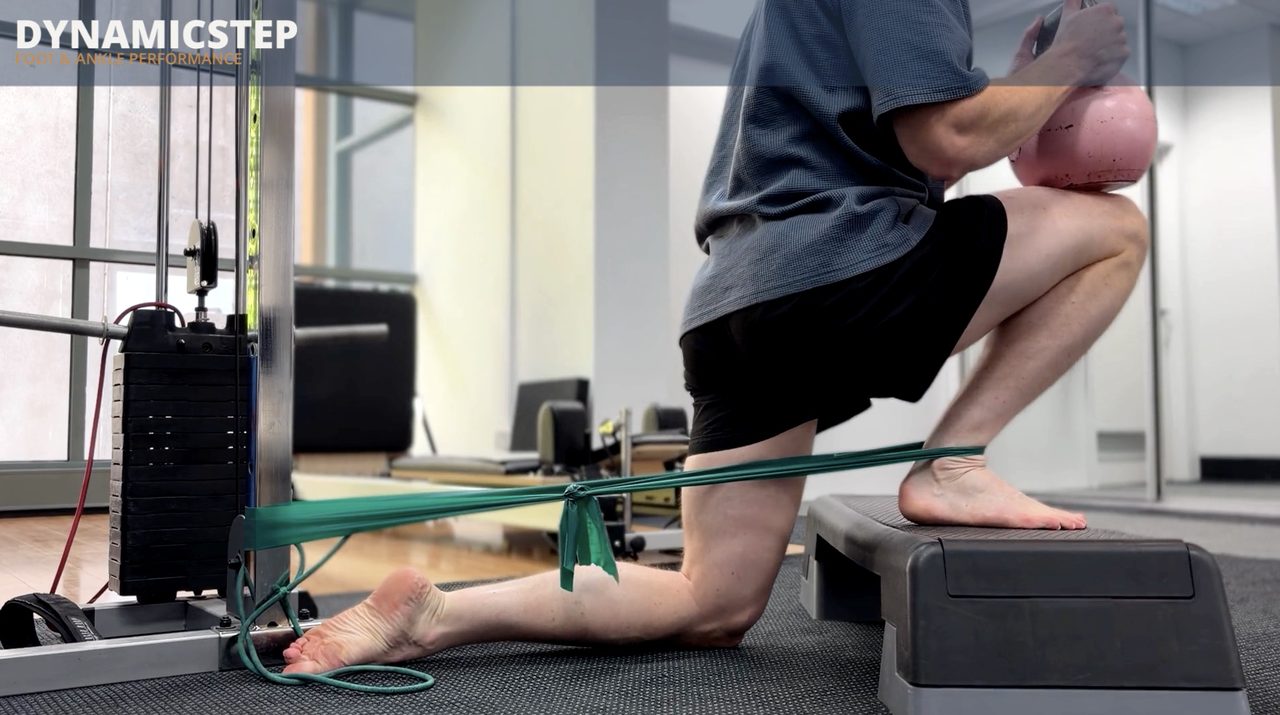

"My ankle is just stuffed" is something people say a lot after an old injury, as if stiffness is simply a fixed feature now. Usually, it isn't. But the honest answer depends entirely on what's causing the restriction in the first place.
The First Question: Structural or Soft Tissue?
Ankle stiffness can come from genuinely different sources, and they don't all respond the same way.
Structural causes are inclusive of an old fracture, osteophytes (bone spurs, often associated with osteoarthritis), or bony impingement. These are physical blocks to movement, and stretching or mobilisation alone won't change them. Meaningful correction here generally requires surgical intervention, eg. debridement or arthroscopy.
Soft tissue and modifiable causes include scar tissue in the joint capsule, ligaments, or retinaculum, or compensatory guarding, where surrounding muscles and tendons restrict movement to protect a joint that feels unstable or painful, even if there's no structural block present. This type genuinely responds to targeted stretching, mobilisation, and consistent rehab. Structural and soft tissue causes generally require surgical and conservative management respectively.
A simple way to tell the difference: try a self-mobilisation technique and measure your range of motion before and after (a knee-to-wall test is a straightforward way to track this). Soft tissue restrictions often show some immediate improvement in that same session, giving you a reasonable indication of which category you're likely dealing with. The knee-to-wall test itself is well validated for this purpose, inter-rater and intra-rater reliability sit above 0.85, which is genuinely excellent for a test you can do yourself at home with nothing more than a wall and a tape measure (Powden et al., 2015).
How Long Does Improvement Take?
Here's where realistic expectations matter. You might get an immediate release and improvement in range of motion during a session, but that tends to subside afterward if it isn't reinforced consistently. Genuine, lasting mobility change builds gradually, becoming a more inherent part of how the joint moves over time rather than a one-off fix.
This can take around four weeks, and for some people, longer. How quickly this happens is dependent on tissue type and how consistently the work is reinforced, which is why tracking your progress systematically matters, it lets you see whether you're genuinely improving or whether you've plateaued, rather than guessing.
Timing matters more than people realise. If you're working with mobility after an ankle sprain specifically, early intervention while the joint is still healing helps towards reducing collagen cross-linking and excess scar tissue formation. This isn't just theory, a Cochrane review comparing immobilisation against early functional movement for acute lateral ligament injuries found early movement associated with a quicker return to work and sport, less persistent swelling, and higher patient satisfaction, without any downside to long-term joint stability (Keene et al., 2016). Once scar tissue has fully formed further down the track, it becomes considerably harder to make the same gains. This is part of why addressing mobility early, rather than waiting to see if it resolves on its own, genuinely changes the outcome.
Why Mobility Isn't Just About Comfort
Ankle dorsiflexion, the movement that lets your shin travel forward over your foot, does more than affect how far you can lunge towards a wall. In people with chronic ankle instability specifically, restricted dorsiflexion has a measurable relationship with dynamic balance performance, tested using reach-based balance assessments, poorer dorsiflexion range correlated with worse anterior and composite balance scores (Basnett et al., 2013). Mobility work in this population isn't just about feeling less stiff, it's addressing a factor genuinely linked to how well the ankle copes under unpredictable, real-world load.
Clearing Up the Myth
The idea that a stiff ankle after an old injury is simply "how it is now" isn't accurate for most people. Even where there is some structural involvement limiting full mobility, that doesn't make an ankle a lost cause. Footwear choices, orthotics, and targeted management of pain or functional limitation can still make a meaningful difference, even in cases where full range of motion isn't fully achievable.
Proper diagnosis, through assessment and where necessary imaging, is what tells you whether you're dealing with a modifiable restriction or a structural one. Assuming the worst without checking often means missing genuine, achievable improvement.
The Bottom Line
Ankle mobility can be improved in most cases, and where there's a genuine structural limit, there are still meaningful ways to manage function and comfort. Early attention matters, addressing mobility soon after an injury sets you up better long-term than waiting.
That said, mobility gets a lot of attention online, more than its actual weight in the full picture. It's genuinely important, but it's one piece of ankle stability, not the whole solution. Strength, footwear, graduated return to activity, and structured programming all need to work alongside mobility work, not be replaced by it. (For the other side of everyday ankle stability, see How to Stop Rolling Your Ankles During Everyday Activities.)
Results vary based on individual presentation. If you're unsure whether your ankle stiffness is structural or modifiable, a proper assessment is the most reliable way to find out.
References
Powden CJ, Hoch JM, Hoch MC. Reliability and minimal detectable change of the weight-bearing lunge test: a systematic review. Man Ther. 2015;20(4):524-532.
Basnett CR, Hanish MJ, Wheeler TJ, et al. Ankle dorsiflexion range of motion influences dynamic balance in individuals with chronic ankle instability. Int J Sports Phys Ther. 2013;8(2):121-128.
Keene DJ, Williams M, Farrow C, et al. Immobilisation versus early ankle movement for treating acute lateral ankle ligament injuries in adults. Cochrane Database Syst Rev. 2016.