
How to Know If You Have Chronic Ankle Instability
Rolled your ankle more than once? Learn the difference between a sprain and chronic ankle instability, and how to check where you stand.
CHRONIC ANKLE INSTABILITYSPORTS PODIATRY
Scott Rayment
7/5/20263 min read
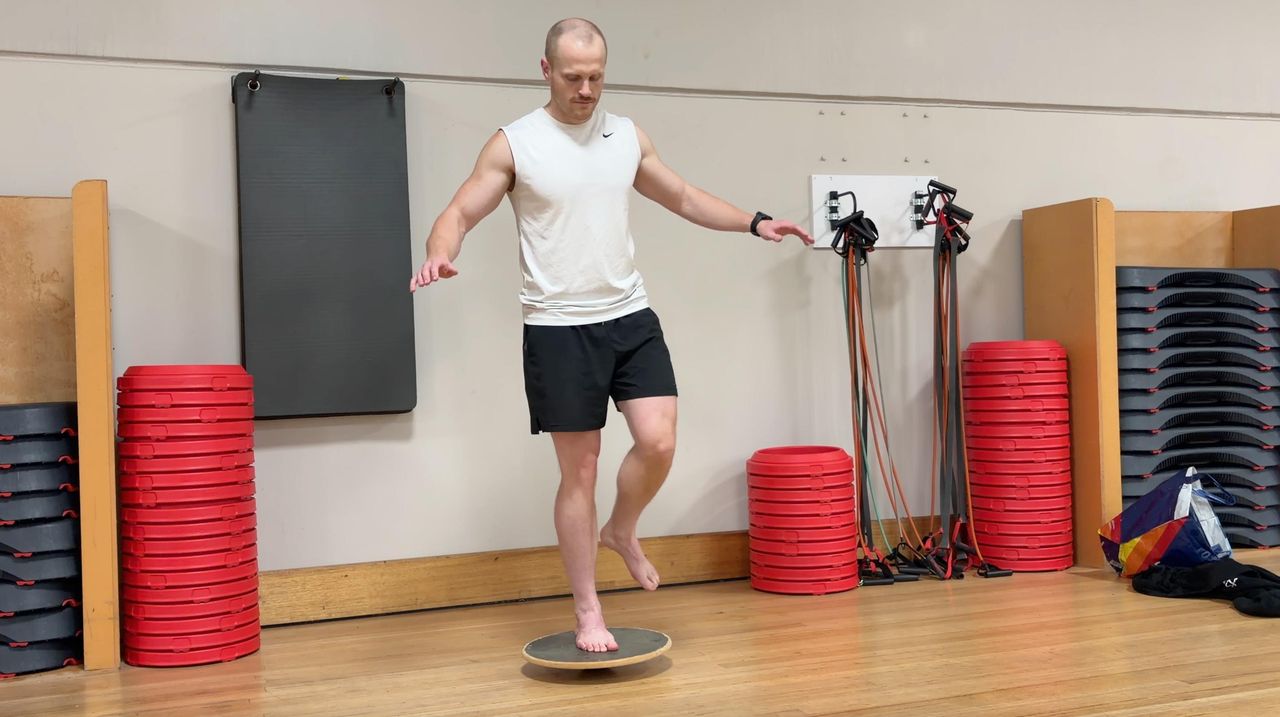
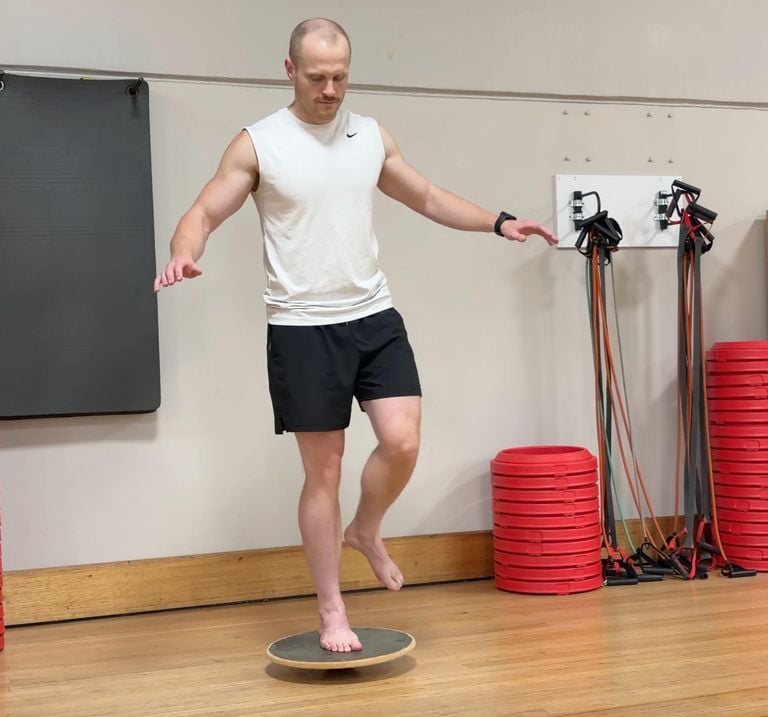
You've rolled the same ankle more than once? Maybe it's given way on flat ground, mid-run, or stepping off a curb. You've tried a brace and it helped a bit, but you still lack trust in the ankle.
Is this just how your ankle is now, or is something specific going on?
This is the question at the core of Chronic Ankle Instability (CAI), and it's different from a one-off sprain in ways that change what you should do about it.
One Sprain and CAI Are Not the Same Thing
An acute ankle sprain is a single injury event, typically categorised by a hyperinversion mechanism of the ankle. Ligaments get overstretched or torn, tendons can get injured (eg. peroneals), there's swelling & pain and with appropriate management most people recover full function over several weeks.
Chronic ankle instability is what can develop afterward, in some people, when the ankle doesn't fully regain its sense of position (proprioception) and structural control. The ligament damage may have healed, but the intrinsic instability hasn't.
The key distinction: A sprain is an event, whereas CAI is the long term pattern.
Signs the Pattern Might Be CAI
None of these on their own confirms chronic ankle instability, but if several apply, it's worth paying attention to:
Repeated rolling - The same ankle gives way more than once, often with less force than the original injury.
A "giving way" feeling on uneven ground, during direction changes, or even standing still.
Persistent lack of confidence and trust in the joint, separate from any pain.
Swelling or stiffness that lingers well beyond the usual sprain recovery window.
Compensation patterns - favouring the other leg, avoiding certain surfaces or movements without quite realising you're doing it.
If this sounds familiar, it is likely CAI. Research puts the rate of chronic ankle instability at around 25% in the general population, and closer to 46% in people who've already had one ankle sprain.¹ The pattern is common enough that it has its own validated diagnostic criteria that I use regularly in clinic.
If this sounds familiar, the ankle may not be receiving or responding to positional feedback the way a stable joint does. It is important to address this instability, as recurrent and persistent trauma to the ankle joint structures (bone, cartilage, joint etc.) can increase your risk of long term osteoarthritis within the joint.
Why a Brace Alone Doesn't Address This
We covered ankle braces in an earlier post, and the short version applies here too: a brace can restrict excessive motion during high-risk moments, and that has real value. What it doesn't do is retrain the proprioceptive and neuromuscular control that's often missing in CAI.
Bracing manages the symptom, rebuilding stability means addressing why the ankle stopped reading the ground correctly in the first place. The two most consistent findings in CAI research are damaged proprioceptive receptors around the joint and measurable weakness in the muscles that evert the ankle (the ones that counteract rolling).² A brace can't retrain either one, but can serve as a useful tool when required.
How to Rebuild Your Ankle
If several of the signs above sound familiar, the next step isn't more rest or another brace. It's a structured rehabilitation approach to rebuilding control. This includes progressive loading, targeted strengthening, balance training, proprioceptive work and criteria-based return to the movements your activity demands.
This kind of rebuilding takes time and the right sequencing with research validated check points that take the guessing out of it.
The DynamicStep Ankle Performance Program
A 12-week, criteria-based program built around the above concepts
Three phases, sport-specific tracks and a clear return-to-sport standard instead of a fixed timeline
This program was designed using current research and my own in clinical rehabilitation exepertise
Not ready to commit yet?
Take the free CAI Self-Assessment and get a read on where your ankle actually stands first.
This content is for educational purposes only and does not constitute individual medical advice. Results vary. Please seek assessment from a registered health professional if you have concerns about your condition.
References
Al-Mohrej, O.A. & Al-Kenani, N.S. (2021). The epidemiology of chronic ankle instability with perceived ankle instability: a systematic review. Journal of Foot and Ankle Research, 14, 41.
Physiopedia. Chronic Ankle Instability. Reviewed summary of proprioceptive and neuromuscular deficits in CAI.