
Should You Wear an Ankle Brace? What the Evidence Says
Ankle braces: helpful support or a crutch? I break down what the evidence actually shows about bracing, rehab, and when each one is the right call.
CHRONIC ANKLE INSTABILITYSPORTS PODIATRY
Scott Rayment - Podiatrist
5/28/20265 min read
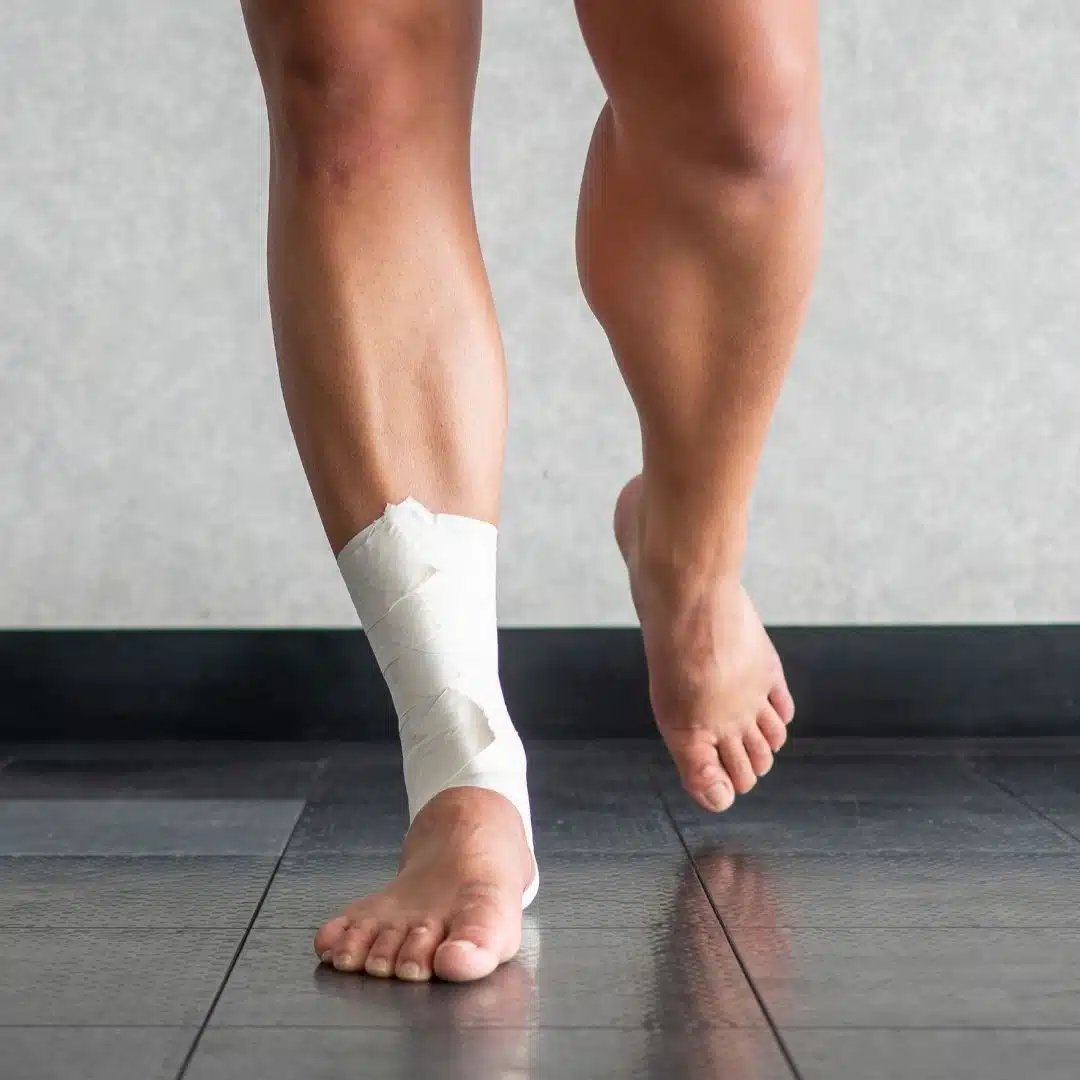
"Am I actually helping my ankle, or just relying on the brace?" It's a question I get asked often, and the honest answer is more nuanced than a simple yes or no.
Ankle braces genuinely reduce injury risk in the right context, the evidence for that is reasonably strong, particularly in athletes with a history of chronic ankle instability. But braces are also commonly misunderstood, overused, and sometimes used as a substitute for proper rehab rather than a support alongside it. The goal was never to depend on a brace forever. The goal is understanding when it helps, when it doesn't, and what problem it's actually solving.
What Ankle Braces Actually Do
Most ankle braces are designed to reduce excessive inversion, the rolling motion behind most lateral ankle sprains. That matters because the majority of sprains happen when the foot rapidly inverts and plantarflexes under load, particularly during landing, cutting, or change of direction.
External support works through a few mechanisms: mechanically restraining excessive movement, increasing sensory feedback around the joint, improving your perception of ankle position, and reducing inversion velocity during high-risk movements.
Research consistently shows lace-up and semi-rigid braces reduce recurrent ankle sprains in athletes, particularly in sports involving jumping, cutting, and rapid directional change (Dizon & Reyes, 2010; Doherty et al., 2014). For athletes with a previous sprain history, braces appear to offer the strongest protective effect.
The Biggest Misconception: "Braces Make Your Ankle Weak"
This idea has been around for years, but the evidence behind it is thin. There's little high-quality evidence showing braces directly cause long-term weakness in the ankle musculature. What's more common is dependency without rehab.
If someone wears a brace while skipping the work needed to restore peroneal strength, dynamic balance, proprioception, landing mechanics, and change-of-direction control, the ankle never regains its full functional capacity. The brace becomes the only source of stability. That's not because the brace weakened the ankle, it's because the underlying deficits were never properly addressed in the first place.
The Caveat Most People Miss
While braces can reduce recurrent sprain risk during sport, some research suggests they may also reduce muscle activation during rehab exercises specifically, in people with chronic ankle instability.
Feger and colleagues examined people with chronic ankle instability performing common rehab exercises while wearing lace-up braces, and found reduced activation in the peroneus longus, gluteus medius, lateral gastrocnemius, and rectus femoris across several functional tasks when the brace was worn. Their conclusion: clinicians should be aware that rehab exercises performed in a brace may come with reduced muscle activity (Feger et al., 2014).
That matters because one of the primary goals of rehab after repeated sprains is restoring neuromuscular control and reactive muscle function. If external support reduces the muscular demand during rehab exercises, there's a reasonable argument that wearing a brace throughout every rehab session may reduce part of the training stimulus.
This doesn't mean braces are harmful. It means context matters. Wearing a brace during high-risk sport participation is a genuinely different situation to wearing one throughout controlled rehab sessions designed to rebuild capacity. For most athletes, the more evidence-based approach is strategic bracing during return to sport and high-risk activity, alongside progressive, unbraced rehab to rebuild strength, proprioception, balance, and reactive control. The brace should support the rehab process. It shouldn't replace the neuromuscular work itself.
When Bracing Makes Sense
After a previous ankle sprain. This is the clearest indication. A previous sprain is one of the strongest predictors of a future one, and once the lateral ligament complex has been injured, recurrence risk climbs. Athletes returning to basketball, netball, football, volleyball, or other court sports after a sprain often benefit from external support during the return-to-sport phase, with multiple systematic reviews showing reduced recurrence with prophylactic bracing in previously injured athletes (Dizon & Reyes, 2010).
During return to sport specifically. This window is where a lot of reinjuries happen. Pain may be gone, swelling settled, and strength may even test normally in isolation, but high-speed sporting movement exposes deficits that standard rehab testing often misses. A brace can offer added stability while higher-level neuromuscular capacity is still being rebuilt.
In chronic ankle instability. People dealing with CAI often describe repeated sprains, a sense of the ankle giving way, reduced confidence on uneven ground, and hesitation during cutting or landing, despite being told the joint has "healed." In these cases, bracing combined with structured rehab can reduce episodes of instability during sport. Chronic ankle instability is rarely just a ligament problem, it's usually a neuromuscular and sensorimotor one too.
Use my FREE self-assessment to check if you have chronic ankle instability!
When Bracing Is Probably Overused
Not every ankle needs external support indefinitely. Bracing becomes a genuine problem when it turns into a permanent default rather than a targeted tool, when someone never progresses beyond passive support, develops fear avoidance without the brace, neglects rehab entirely because the brace is "handling it," or loses confidence moving without it. Once strength, proprioception, and sport-specific control have genuinely been restored, a well-rehabbed ankle should tolerate most sporting demands without depending entirely on external support.
What About Performance?
Athletes often worry braces will cost them speed, agility, or jump height. The evidence is mixed but generally reassuring, some studies show small reductions in ankle range of motion or vertical jump with more restrictive braces, but these changes are typically minor and may not meaningfully affect performance in real sporting environments. For athletes with genuine instability, the confidence gain and reduced reinjury risk usually outweigh a small movement restriction. In practice, an unstable ankle tends to cost more performance than a braced one does.
The Bigger Problem: Most Ankles Are Under-Rehabbed
This is the part that gets missed most often. The real issue usually isn't whether someone wears a brace, it's whether the ankle was ever properly rehabbed in the first place. Plenty of rehab stops once pain settles and basic strength returns on paper.
Recurrent ankle sprains are strongly associated with persistent deficits in dynamic postural control, joint position sense, peroneal reaction timing, force absorption, landing strategy, and change-of-direction mechanics. These deficits can persist for months or years after the original injury when rehab is incomplete (Gribble et al., 2016). That's why some people keep rolling their ankle despite "normal" scans or being told the ligament has healed. The tissue may heal. The system underneath it often doesn't, not without deliberate work.
So, Should You Wear One?
Sometimes yes, sometimes no. An ankle brace isn't inherently good or bad, it depends entirely on why you're using it. For athletes with a previous sprain, chronic instability, or moving through a return-to-sport phase, bracing can reduce reinjury risk and improve confidence under load. But it should support rehab, not replace it. If your ankle only feels stable when it's taped or braced, that's usually a sign something underneath still needs addressing.
If your ankle only feels stable when it's braced or taped, that's worth addressing directly. The DynamicStep Foot and Ankle Performance Program is a 12-week, checkpoint-based programme built to rebuild genuine ankle stability, not just manage around instability.
Results vary based on individual presentation. This is general education, not personalised advice. A proper assessment can identify whether bracing, rehab, or both are the right approach for your ankle.
References
Dizon JMR, Reyes JJB. A systematic review on the effectiveness of external ankle supports in the prevention of inversion ankle sprains among elite and recreational players. Journal of Science and Medicine in Sport. 2010;13(3):309 to 317.
Doherty C, Delahunt E, Caulfield B, Hertel J, Ryan J, Bleakley C. The incidence and prevalence of ankle sprain injury. British Journal of Sports Medicine. 2014;48(7):560.
Feger MA, Donovan L, Hart JM, Hertel J. Effect of ankle braces on lower extremity muscle activation during functional exercises in participants with chronic ankle instability. Journal of Sport Rehabilitation. 2014;23(3):195 to 203.
Gribble PA, Bleakley CM, Caulfield BM, Docherty CL, Fourchet F, Fong DTP, Hertel J, Hiller CE, Kaminski TW, McKeon PO, Refshauge KM, Verhagen EA, Vicenzino BT, Wikstrom EA, Delahunt E. Evidence review for the 2016 International Ankle Consortium consensus statement on the prevalence, impact and long term consequences of lateral ankle sprains. British Journal of Sports Medicine. 2016;50(24):1493 to 1495.